Background
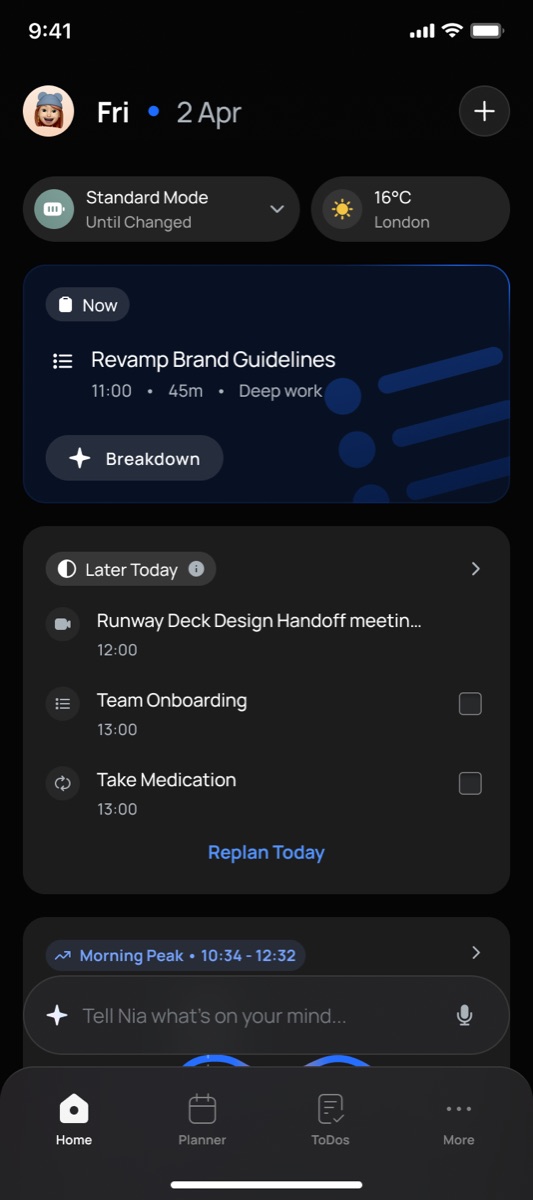
Rivva started as a planner built around energy: do hard work when you have the most of it. Our strongest sign-ups had ADHD, so the product team rebuilt Rivva for them.
I co-founded Rivva in July 2025 and led design and research across iOS, Android, web and a browser extension, in a team of eight. We closed Rivva in May 2026.
What’s the impact?
- I redefined activation around what people experienced, and the team built to it
- Activation went from 22% to 34% after the onboarding rebuild
- 200 paying subscribers and 53% monthly renewal, with no paid marketing
- Shipped to iOS, Android and web in 30+ countries within eight weeks of v1
What’s the problem?
Most planners assume you can plan and get going on your own. For adults with ADHD, that’s exactly what comes and goes. They needed help starting, and help recovering when a plan broke.
Our own numbers hid this. Users grew from 394 to 711, but activation fell from 56.8% to 50.2%. It counted people who finished setup, not people the app had helped, so it barely predicted who stayed.
Is this a real problem?
I combined research on executive function, ADHD forums, interviews with early users, and four sessions with Aanu Jide-Ojo, an HCPC-registered clinical psychologist. The same things kept coming up: a to-do list doesn’t help you start, getting things out of your head helps, and once the day derails, people give up on the plan. Aanu reframed it for me: these users need interrupting more than accommodating. I’d designed gentle reminders, the kind I’d want. She told me to start insistent and walk it back.
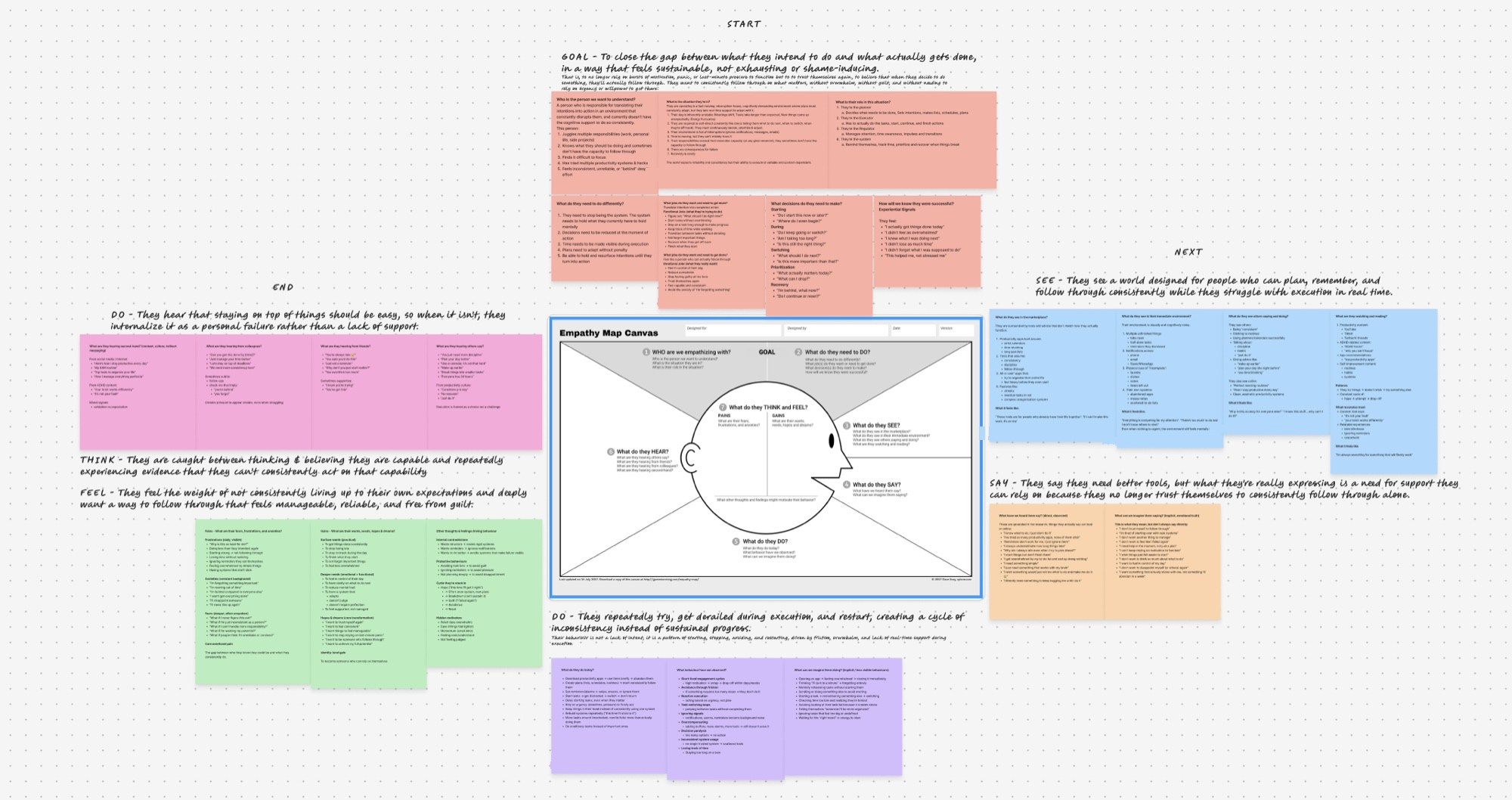
Then I looked for the behaviour that predicted who came back. Within 48 hours, a person had three tasks scheduled by Nia, our assistant, and had finished at least one. People who did this were far more likely to return. That’s a correlation, not proof, but it was strong enough to define activation around it.
Challenges
- The metric hid the problem. Finished setup looked like health while the people we built for were leaving. I redefined activation around the behaviour that predicted staying, built a shared PostHog view the team worked from, and argued for pausing the sprint’s roadmap work to fix onboarding first.
- Personalising needed context, and asking for it lost people. A questionnaire of about 23 steps came before any help at all.
- Our CTO stepped down. Until we closed, I took on engineering delivery: daily morning syncs instead of twice a week, one shared bug list we prioritised together, and a release held back until scheduling was reliable. The engineers kept the technical decisions.
What did we ship?
A first plan in the first session
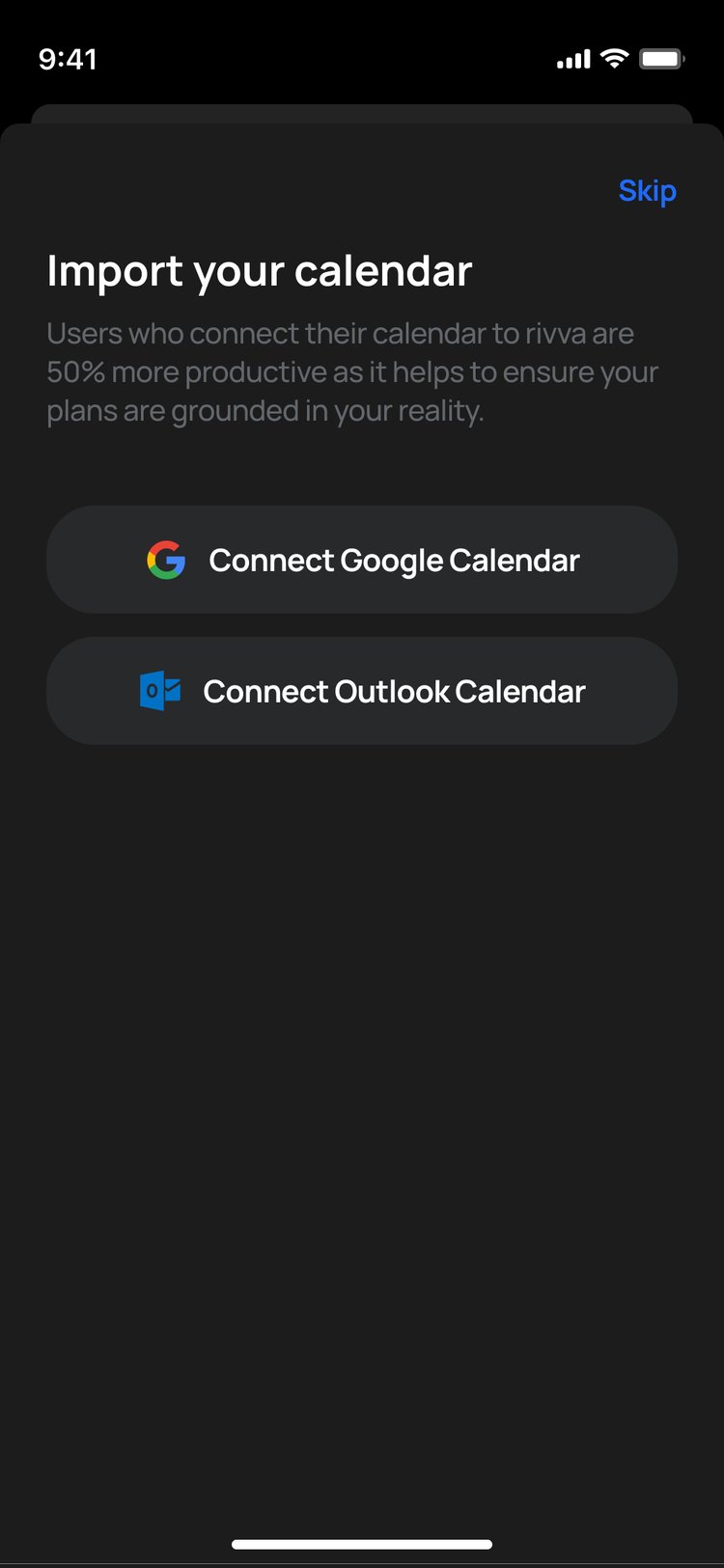
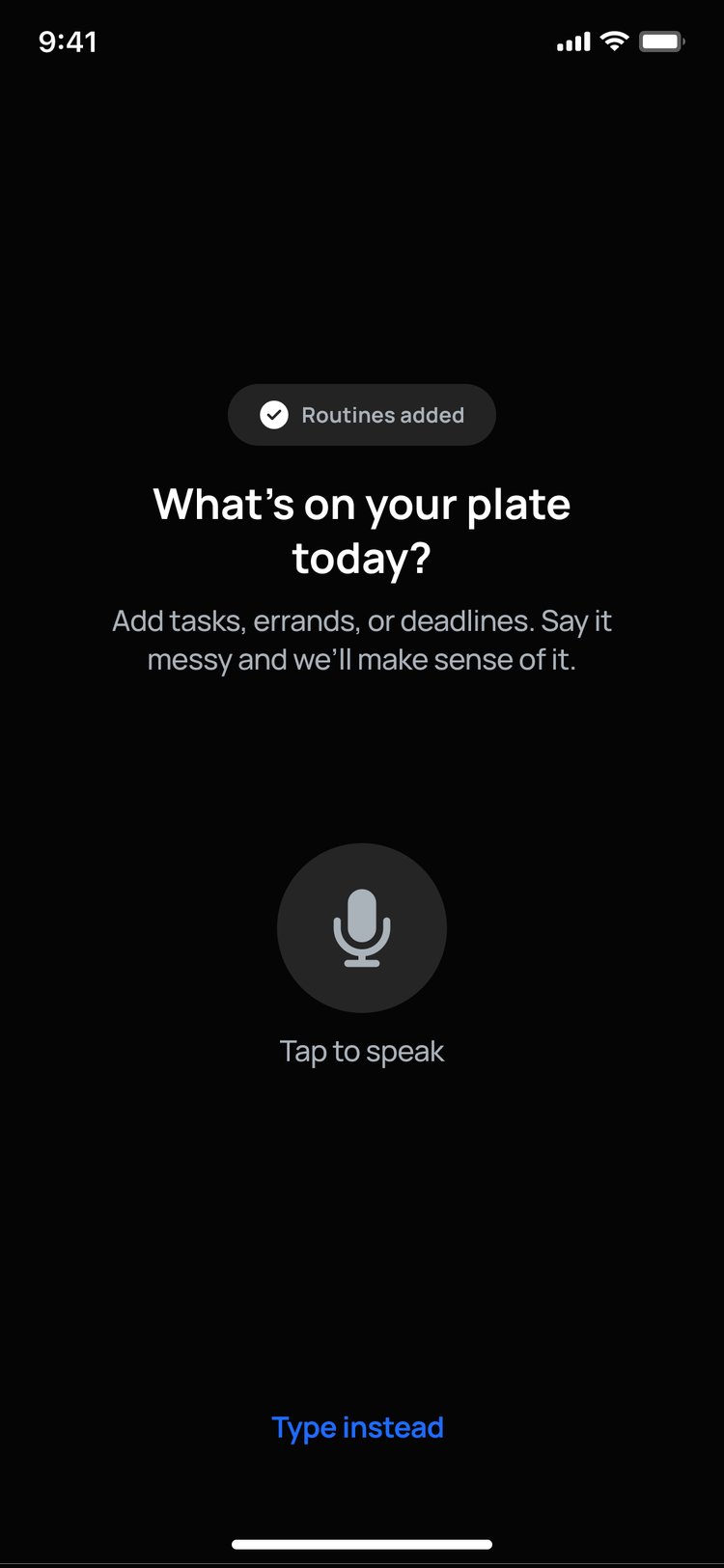
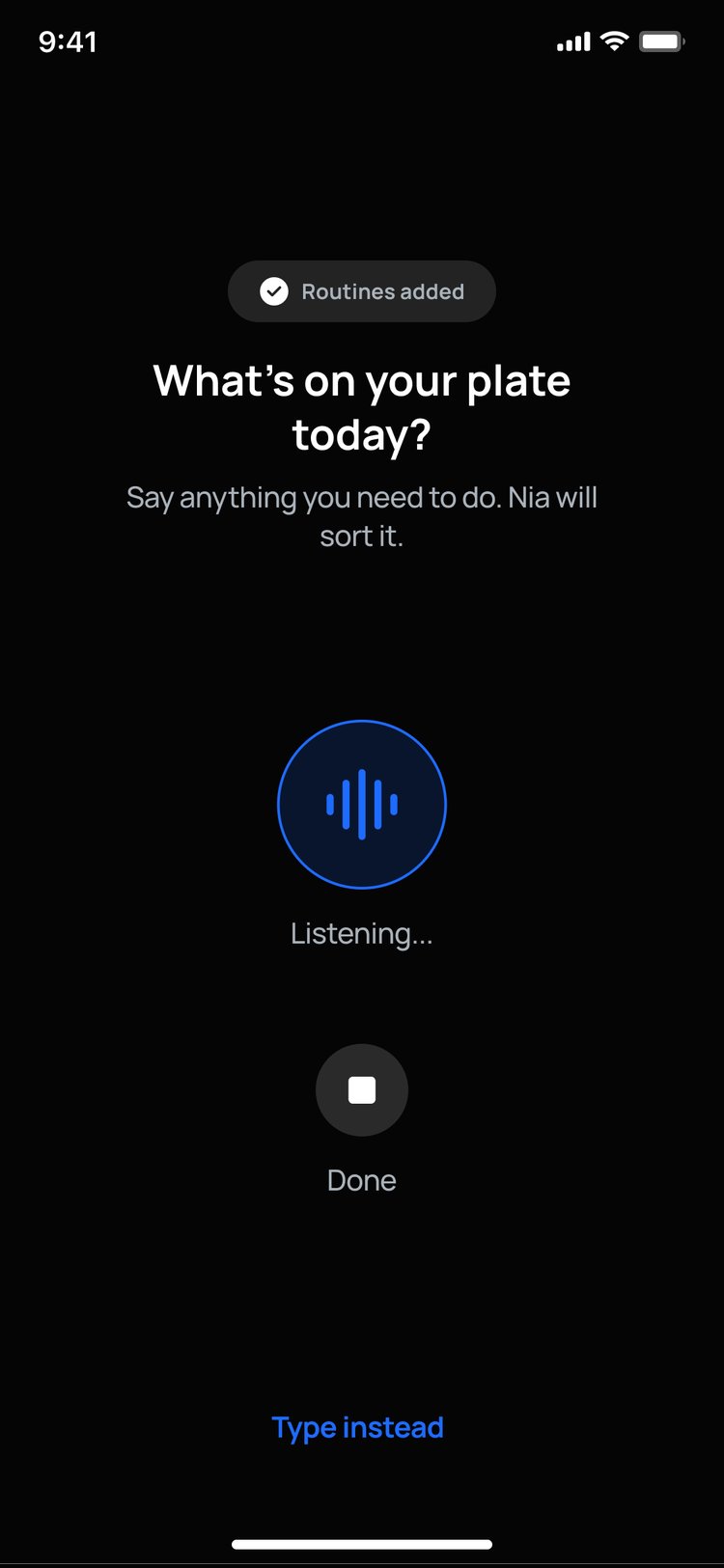
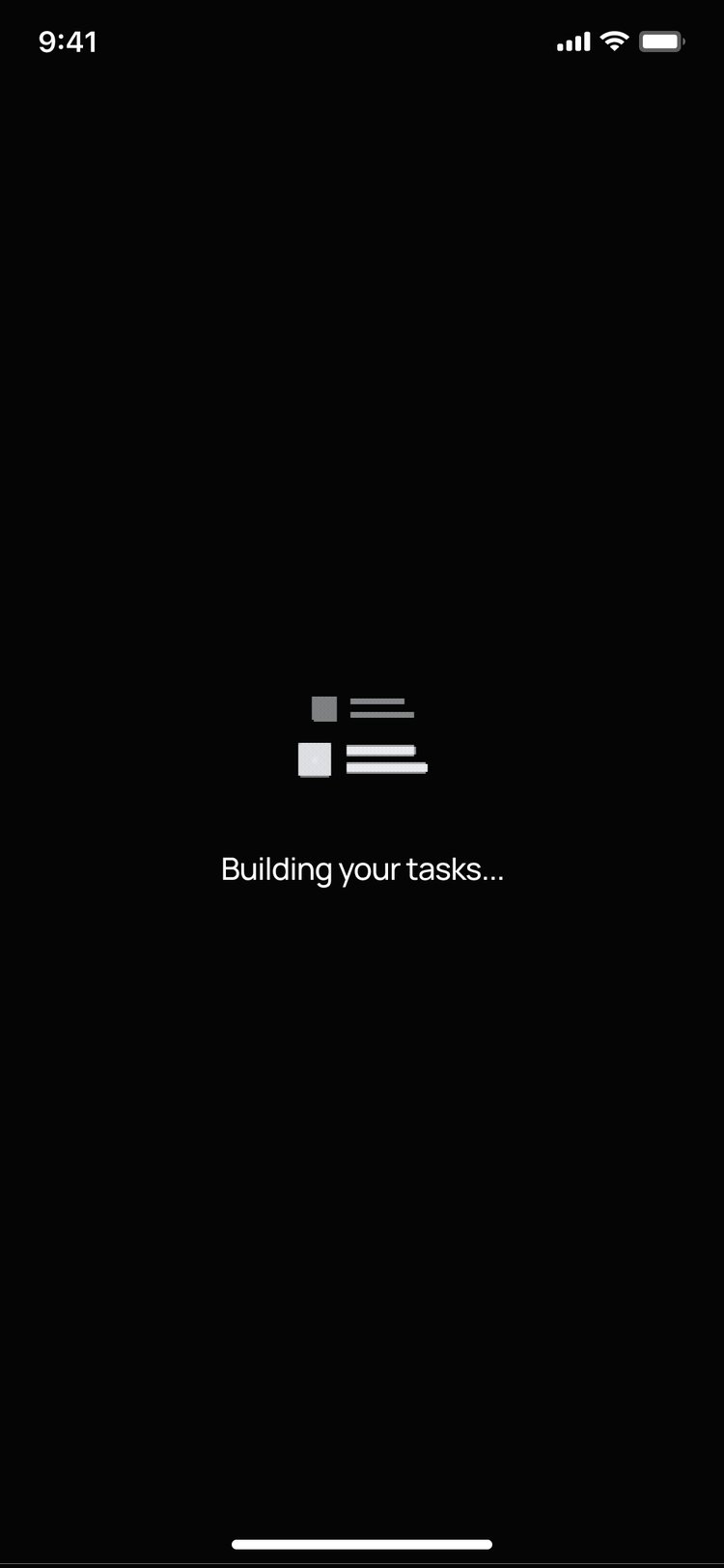
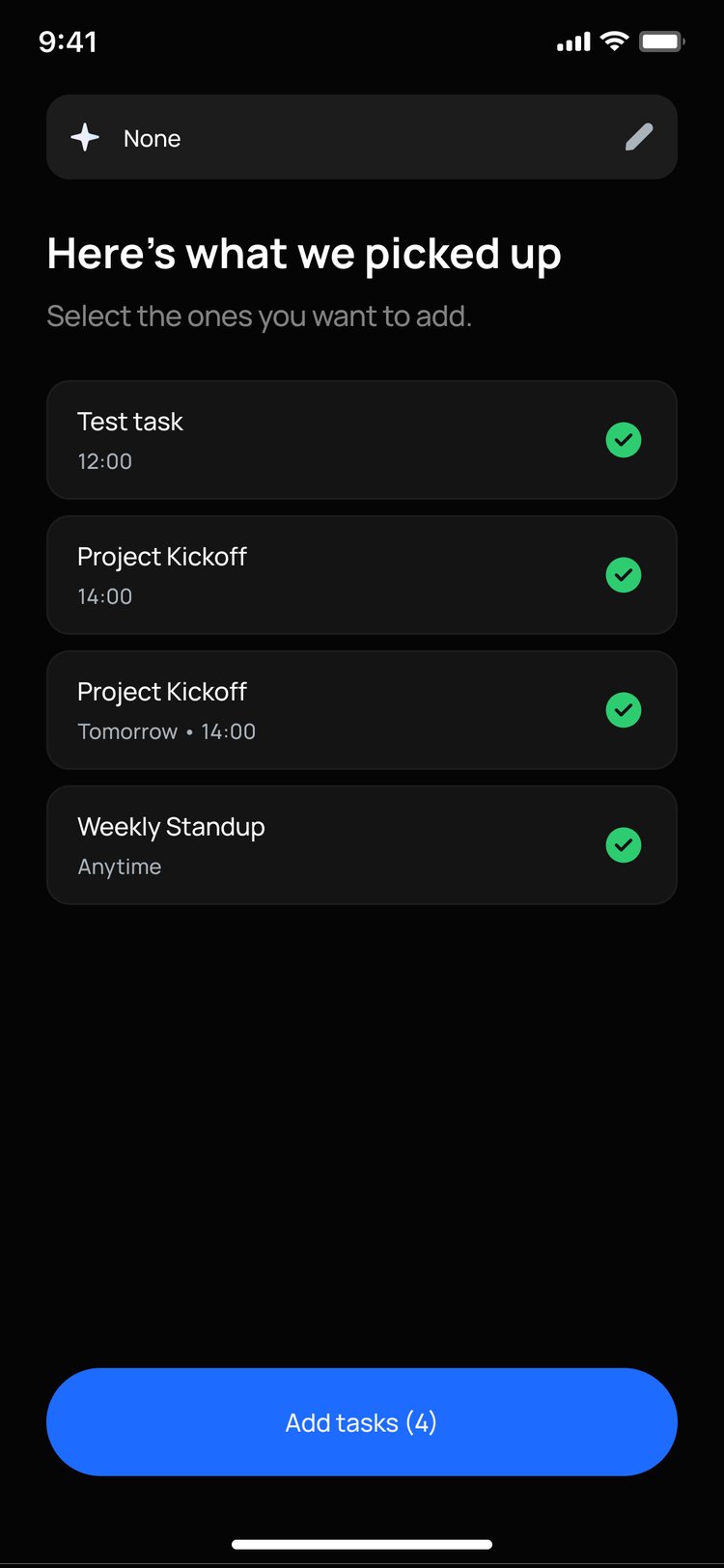
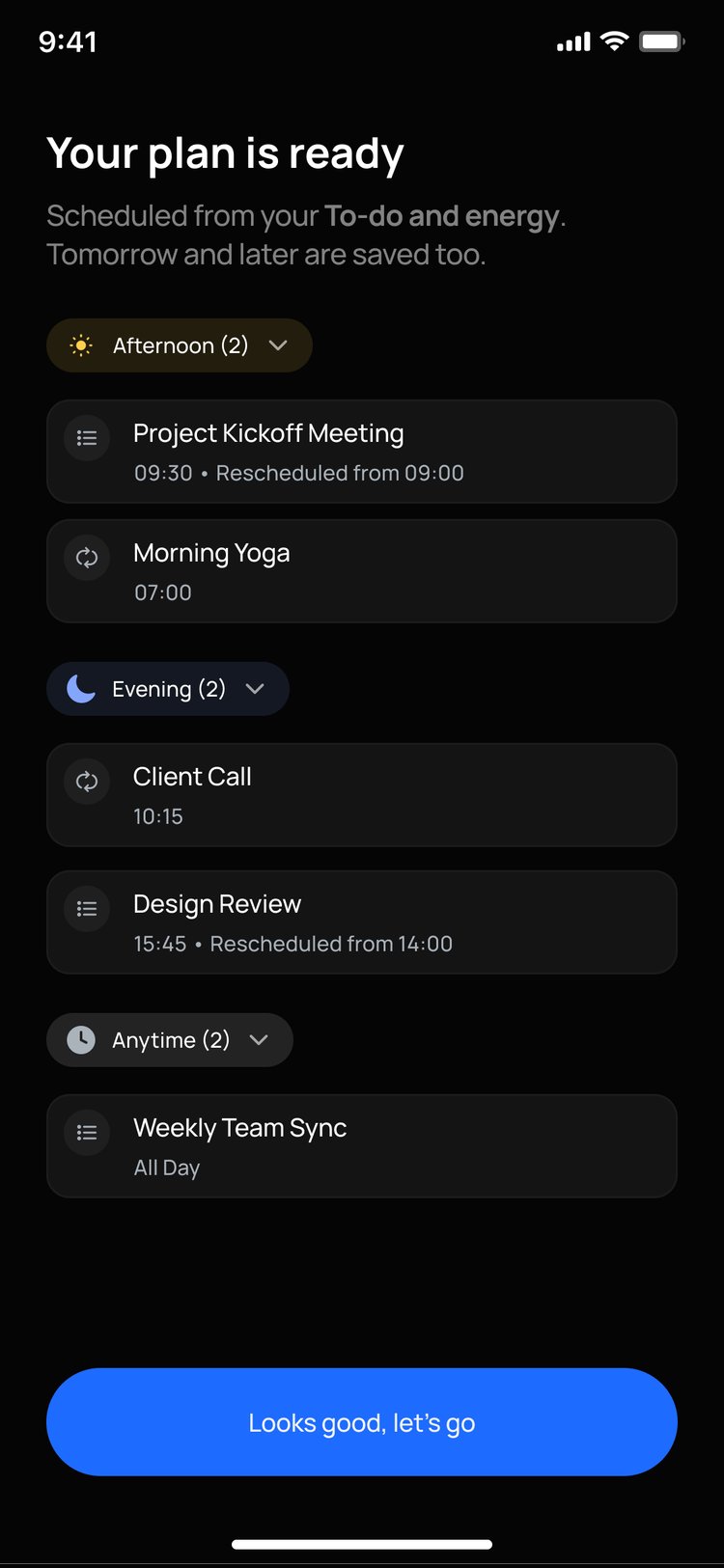
I proposed and led the new onboarding: no questionnaire, setup moved into the app as a checklist on Home, and a first plan built from gaps in your calendar and whatever you said out loud. It shipped on 12 March 2026.
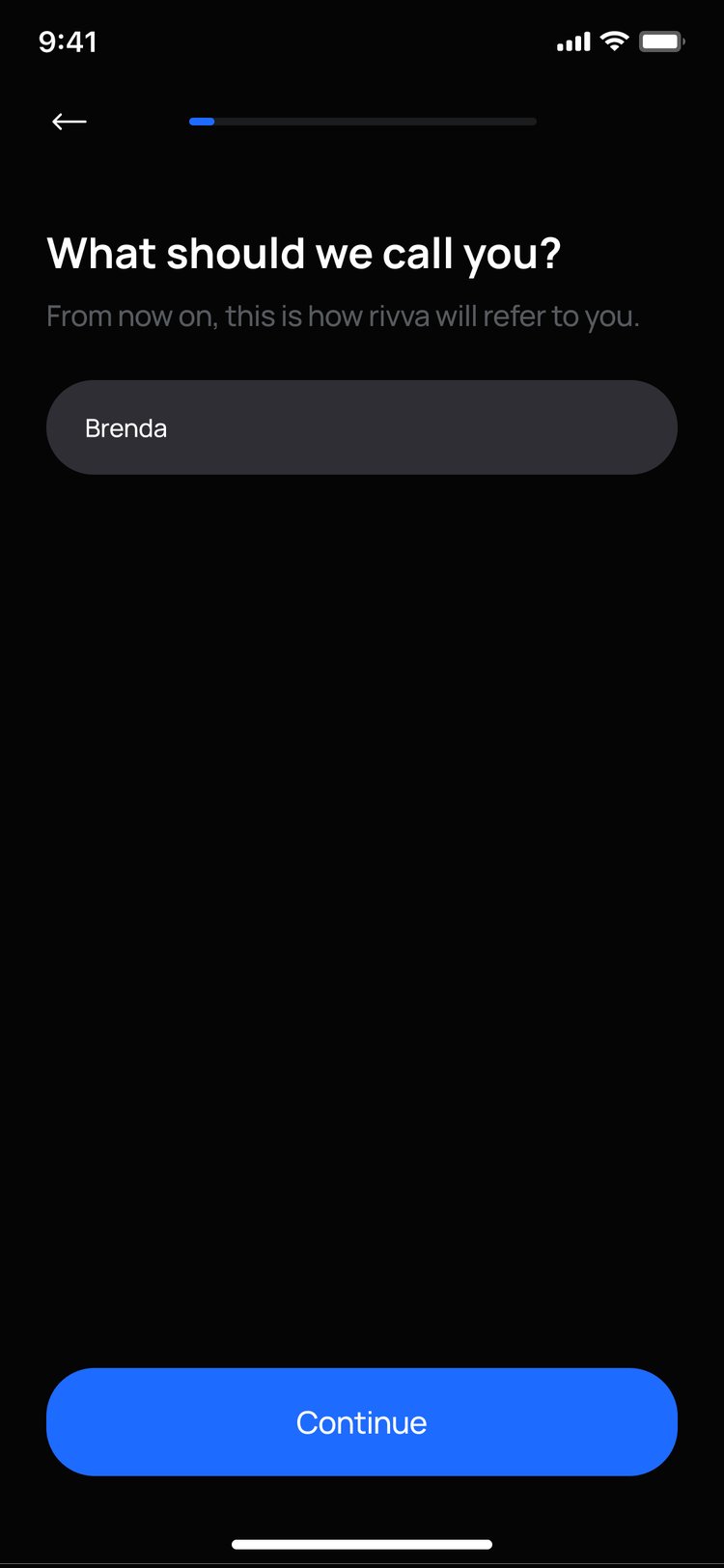
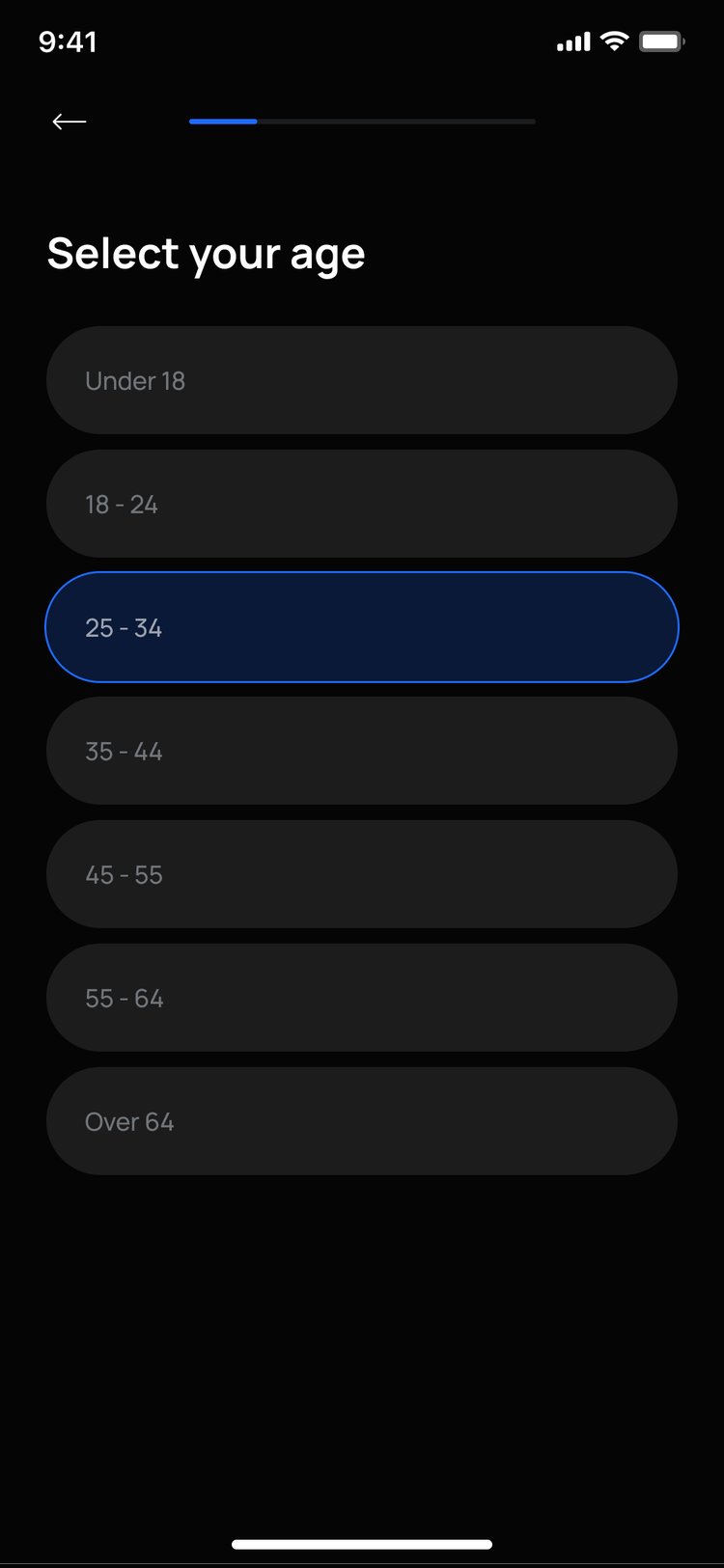
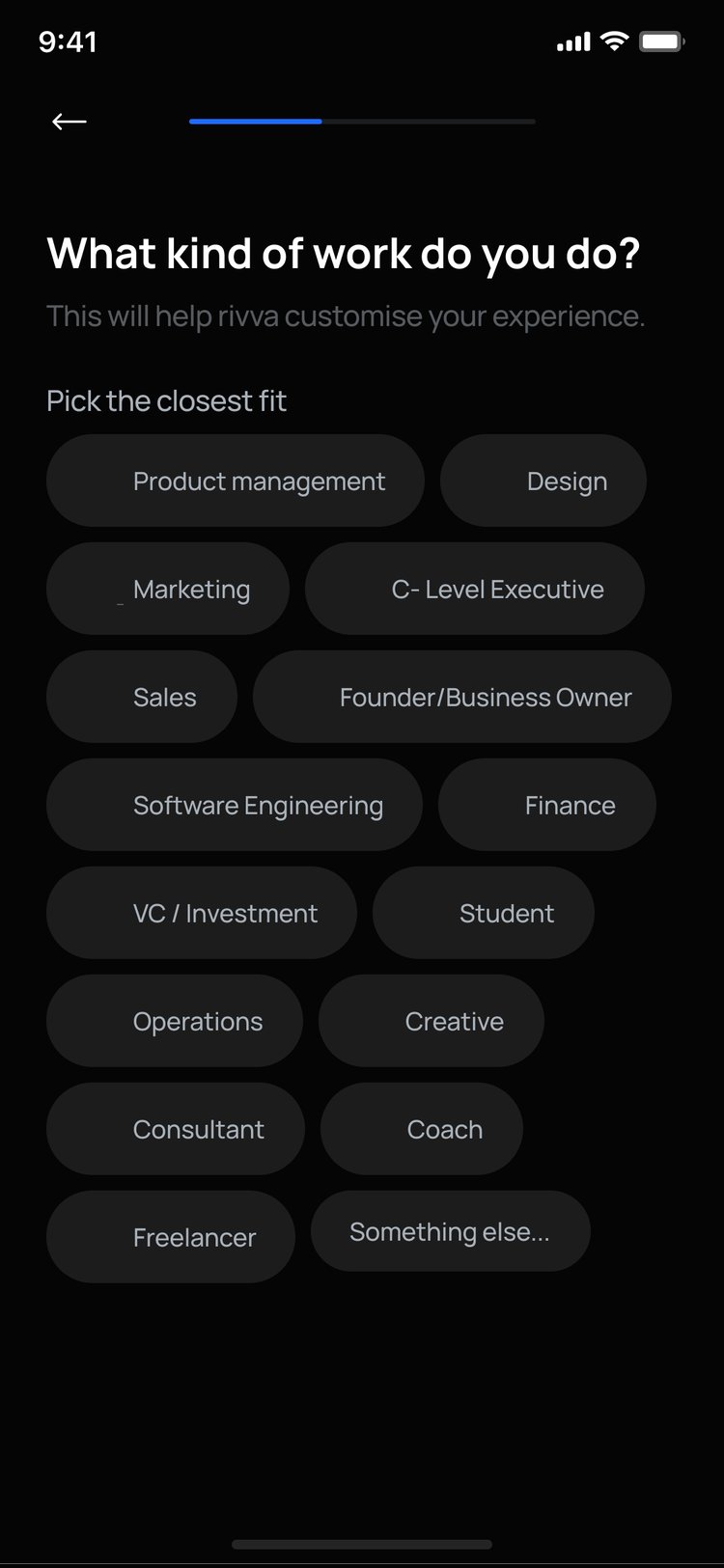
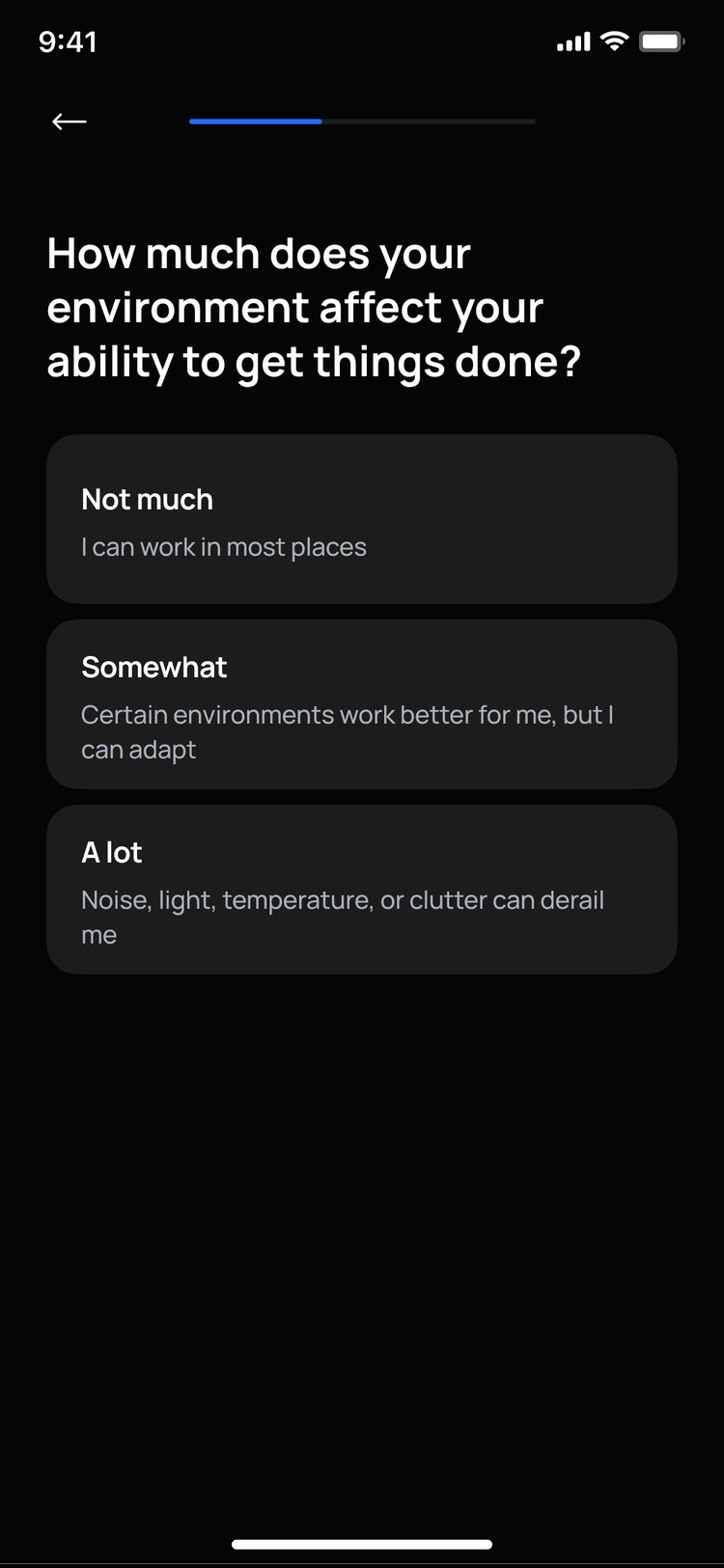
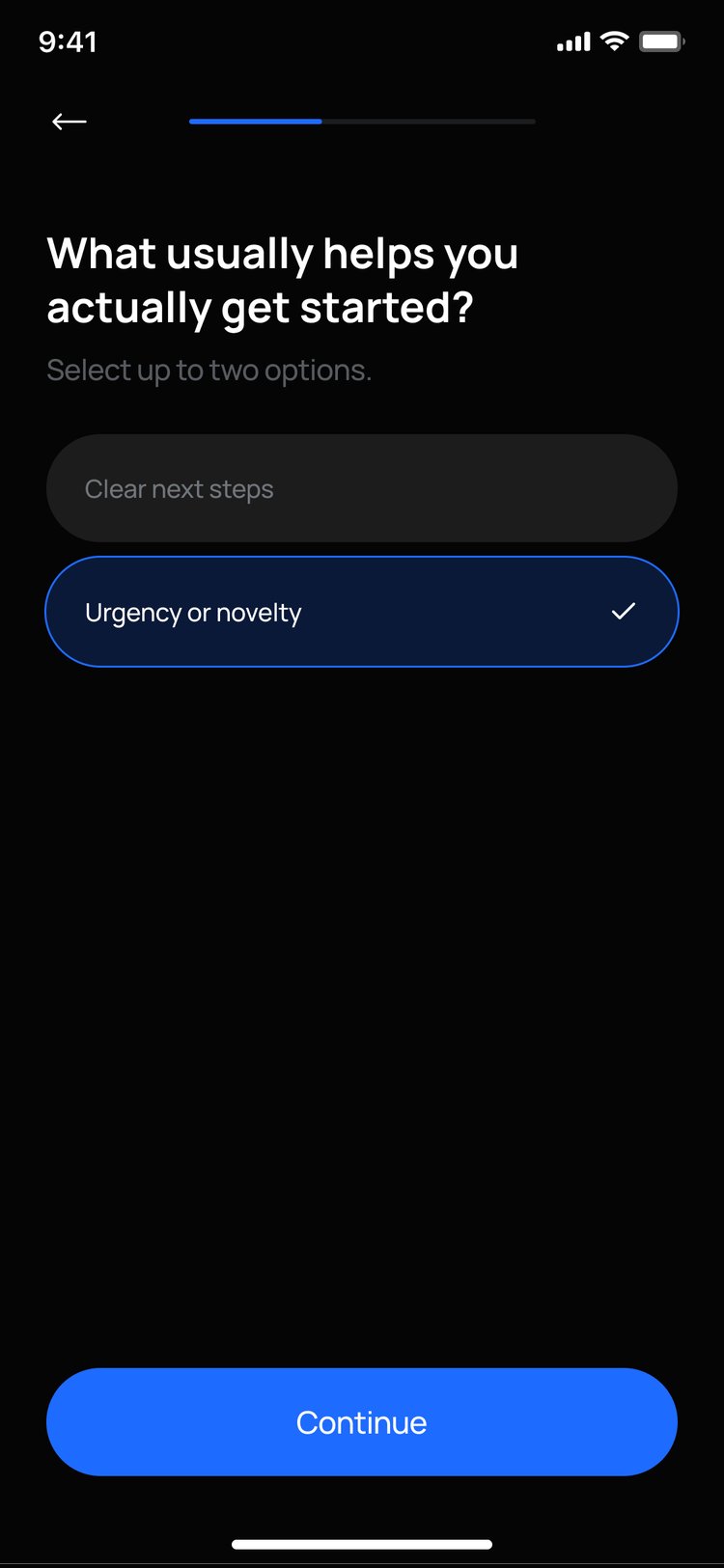
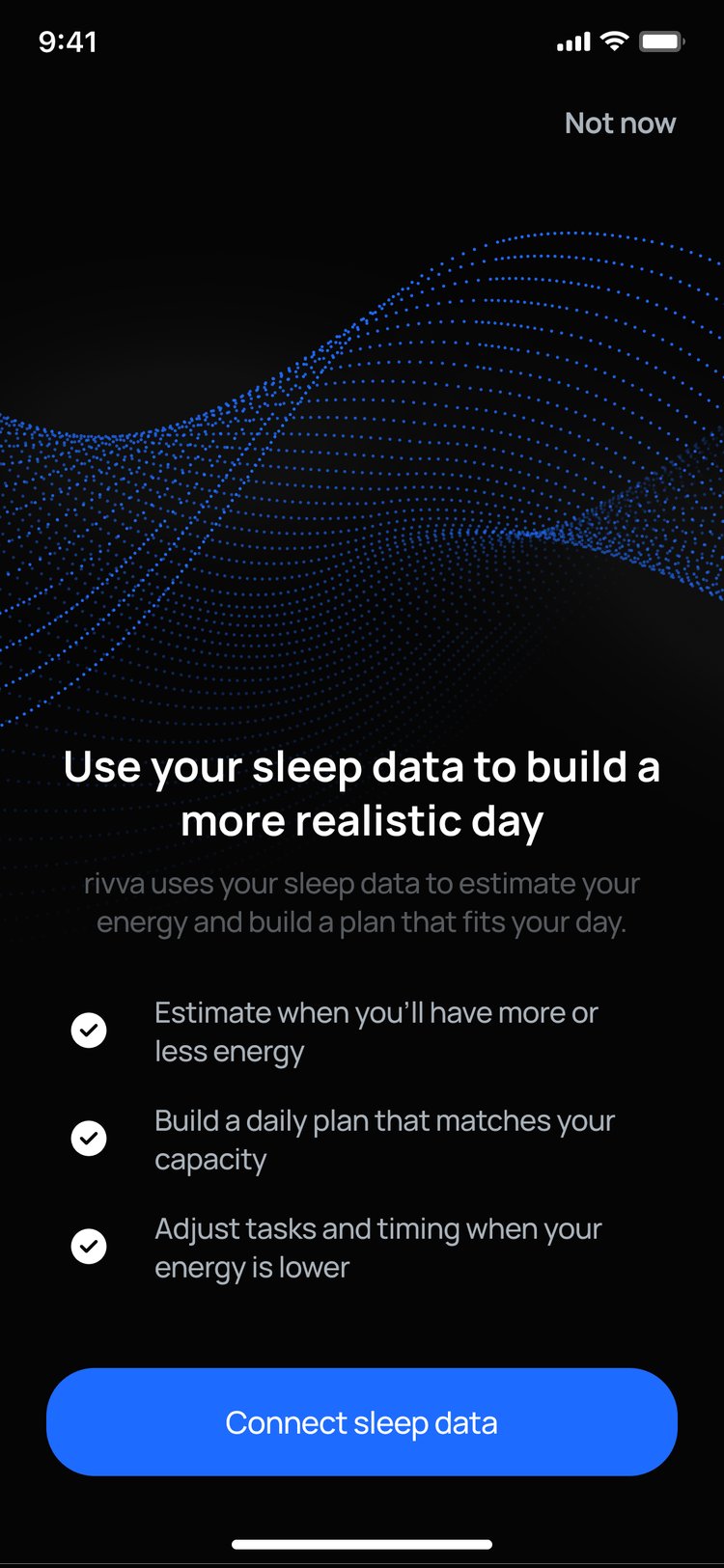
- Good: Feels tailored and thorough
- Not so good: About 23 steps before any help
- Not so good: The drop-off the research warned about
- Good: Calendar gaps plus one spoken task, and Nia builds the plan
- Good: Drives the behaviour that predicted retention
- Not so good: Less personal on day one
- Not so good: Fewer people set up energy
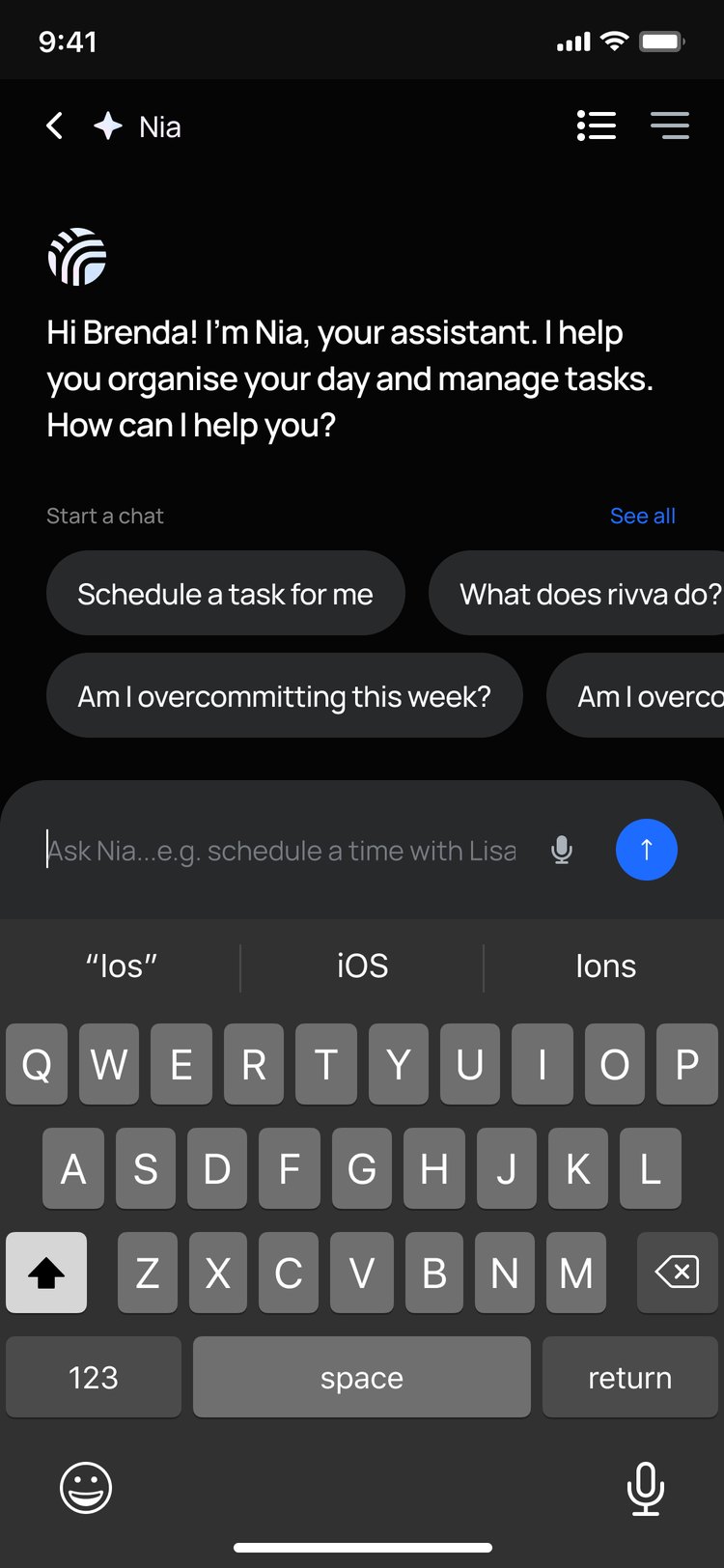
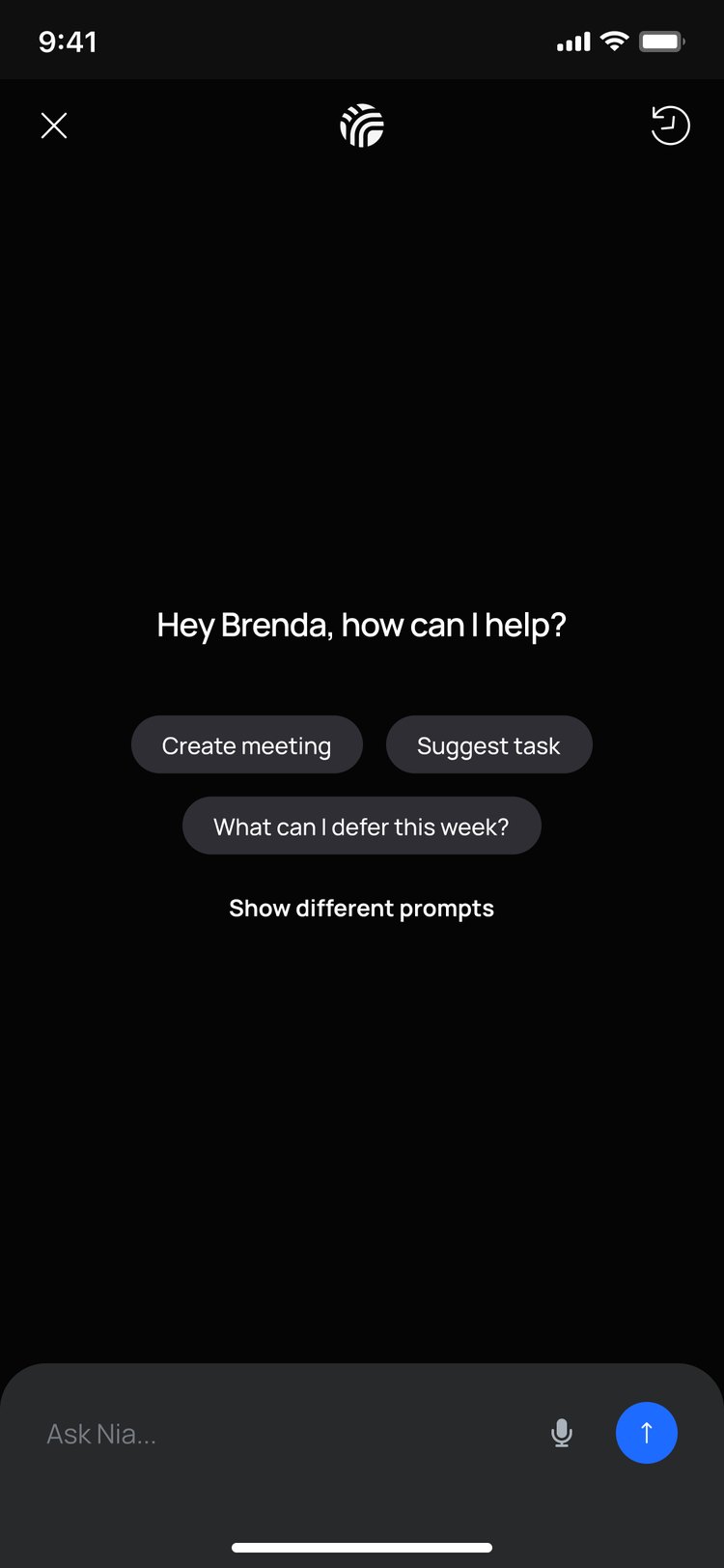
Nia proposes, you confirm
Nia broke big tasks into steps, replanned the day when something slipped, and turned emails into tasks. I set the rules it followed. Explicit commands act now, and anything Nia suggests asks first. Nothing saves without approval, and every change can be undone. Its voice was short and warm, with no exclamation marks and no blame.
When something shifts, plans slip. That’s not on you.
Rivva onboarding copy
I wanted a live waveform while Nia worked. Engineering time won, and the lighter state shows real steps, like checking your availability.
Capture, break down, replan
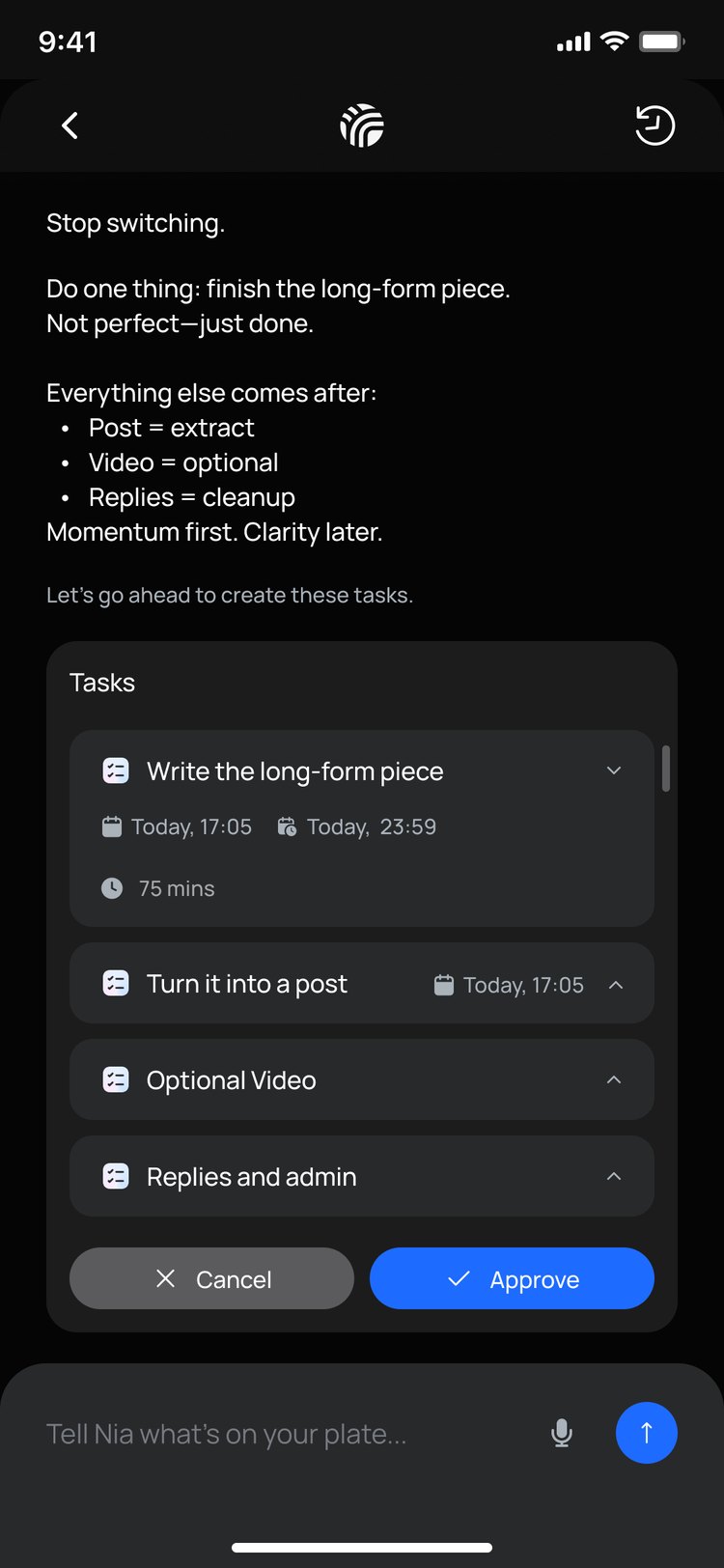
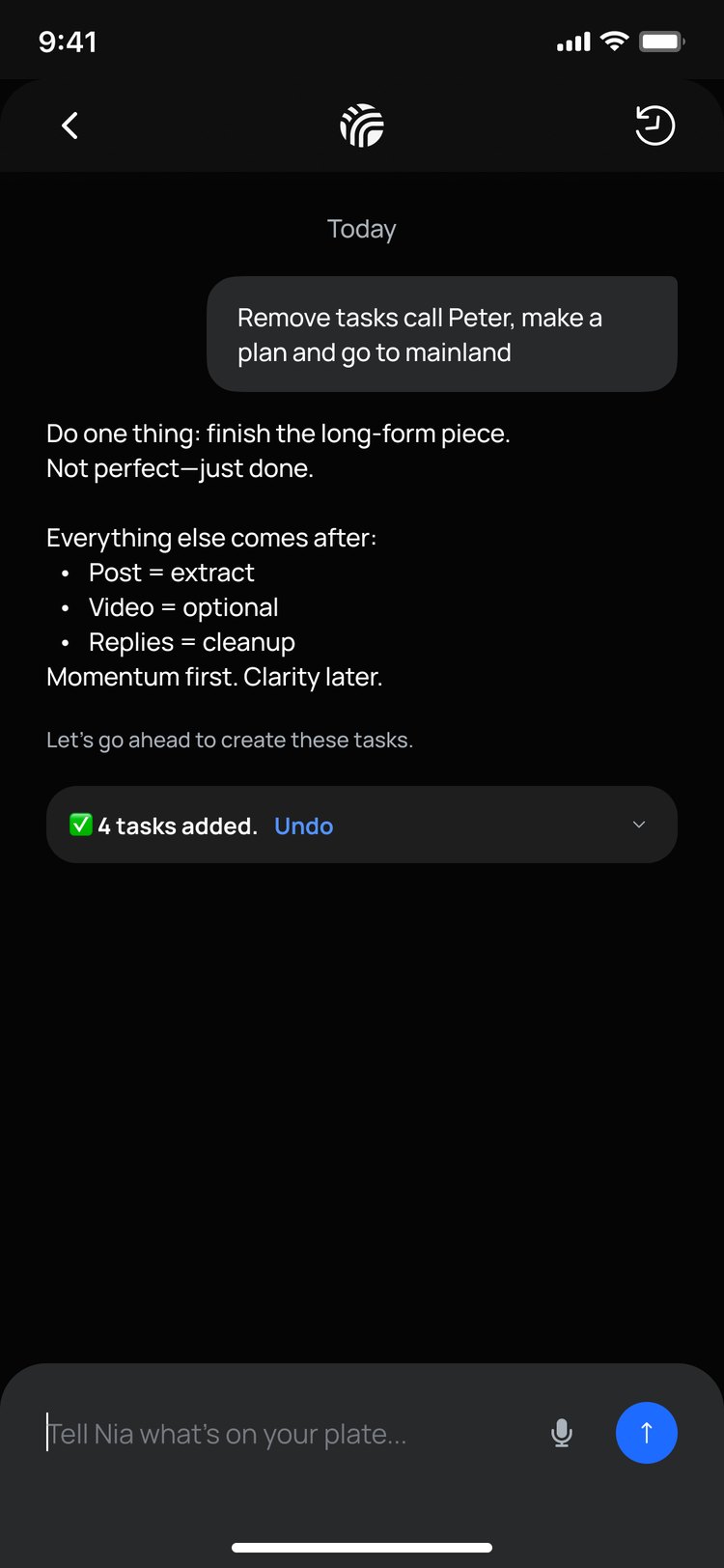
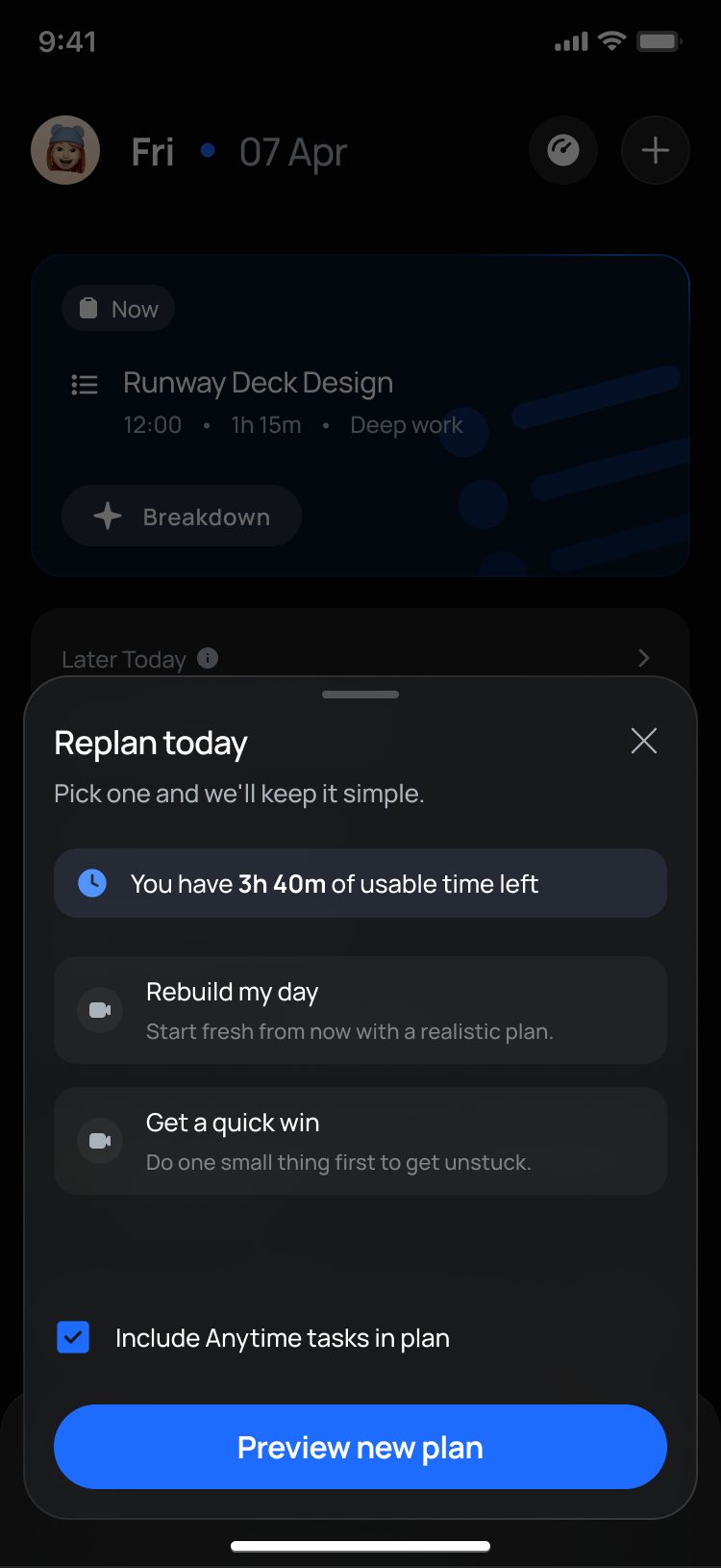
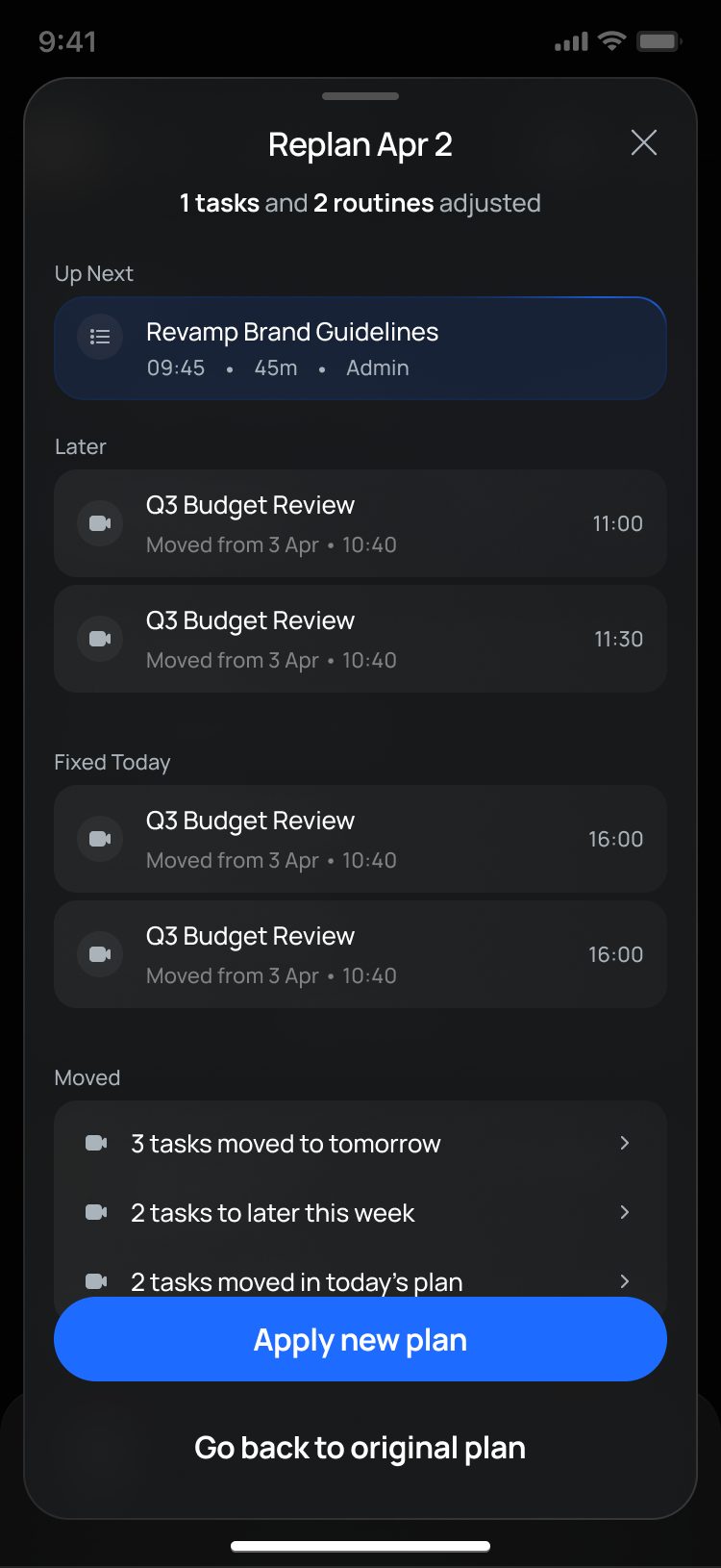
Replan was for when the day fell apart. My first version led with your usable time left and previewed every change. The shipped one asks what you need right now, a rebuilt day or one quick win, then shows a short reset to apply. With no easy fix, Nia said so:
I couldn’t find a lighter swap right now, so I made this task easier to start.
Nia, when a replan has no easy answer
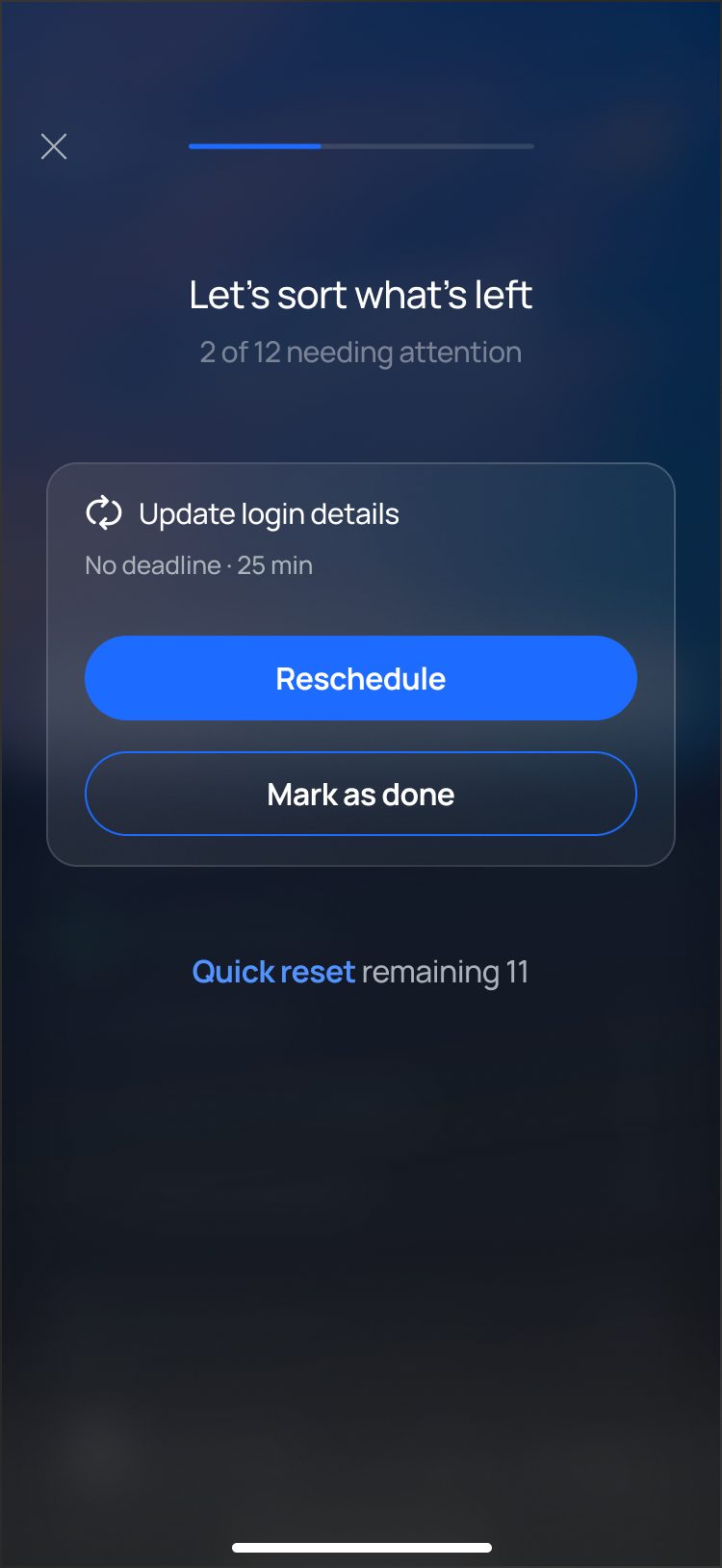
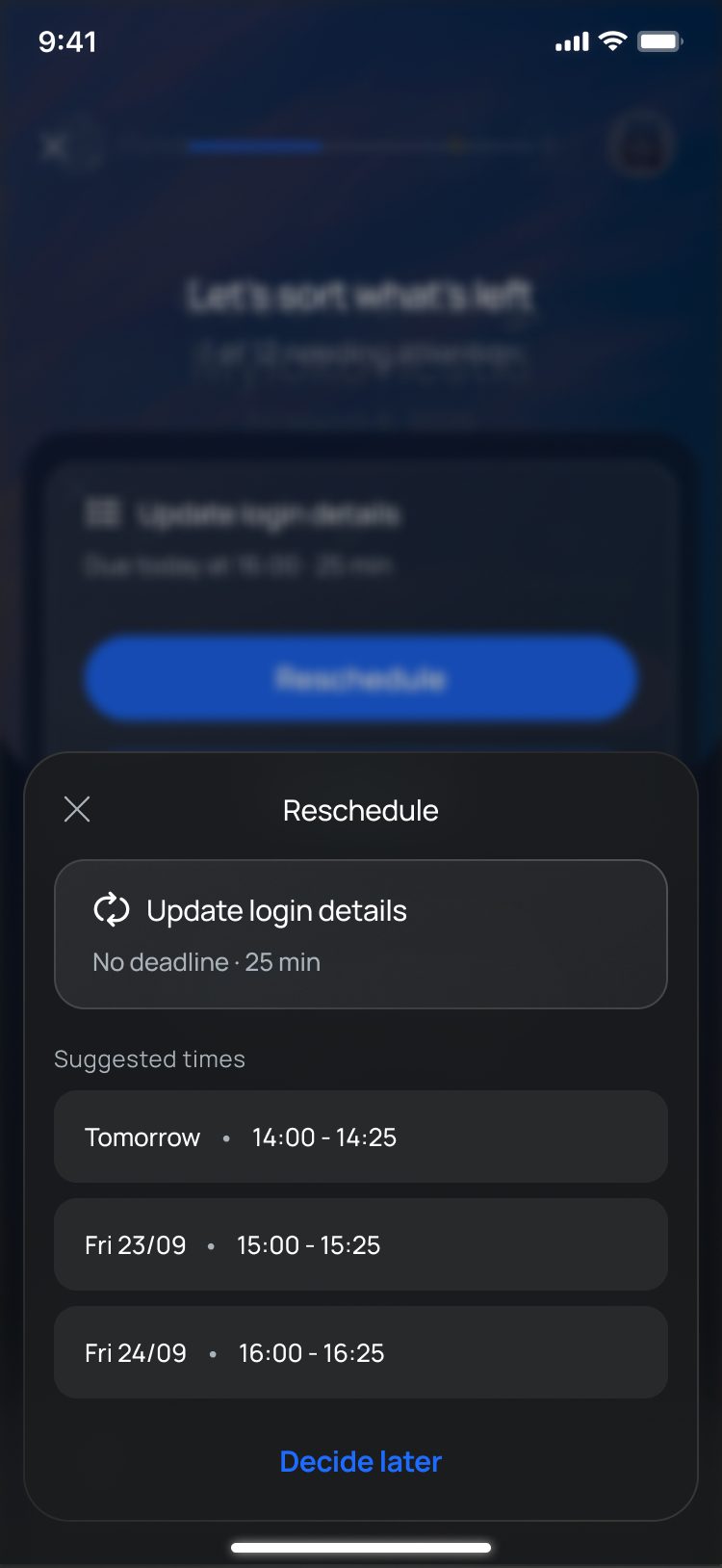
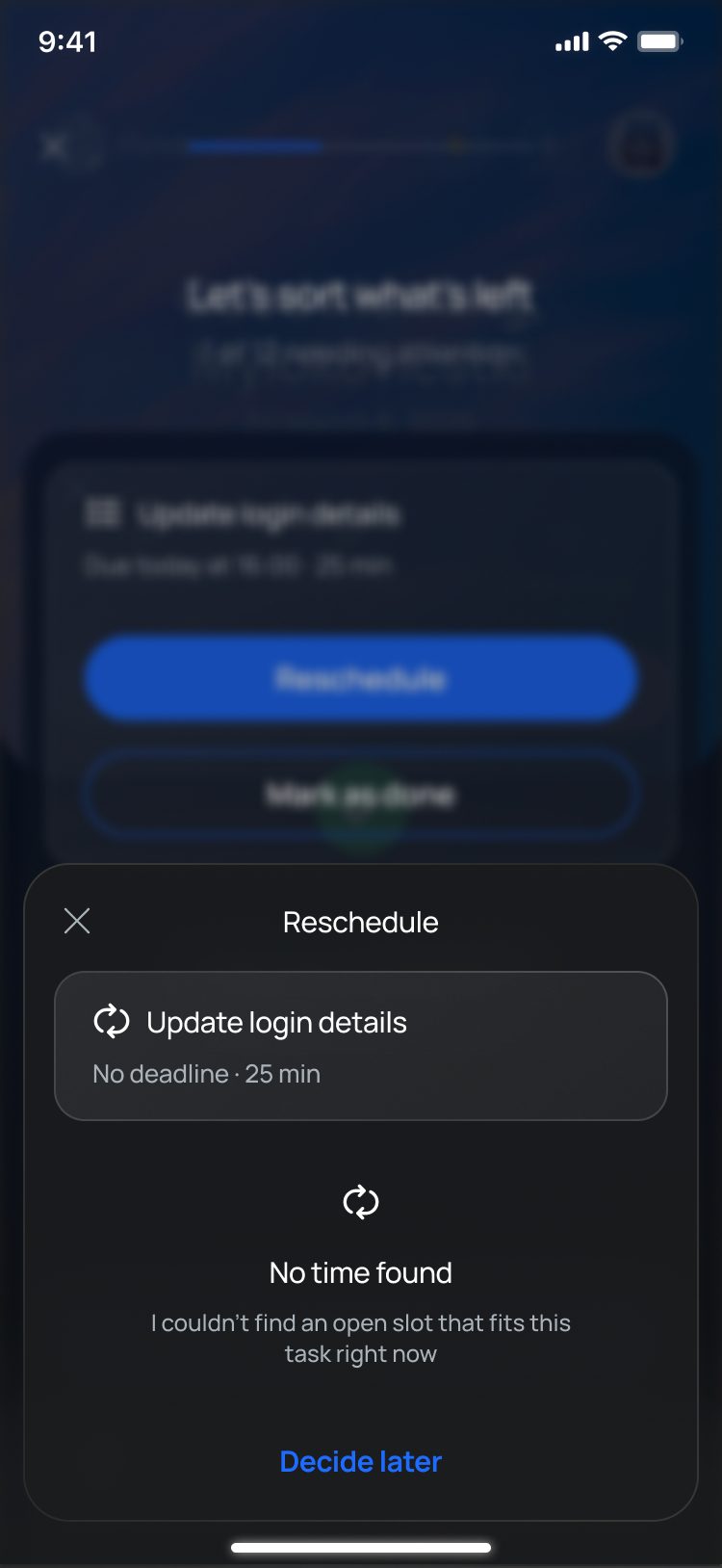
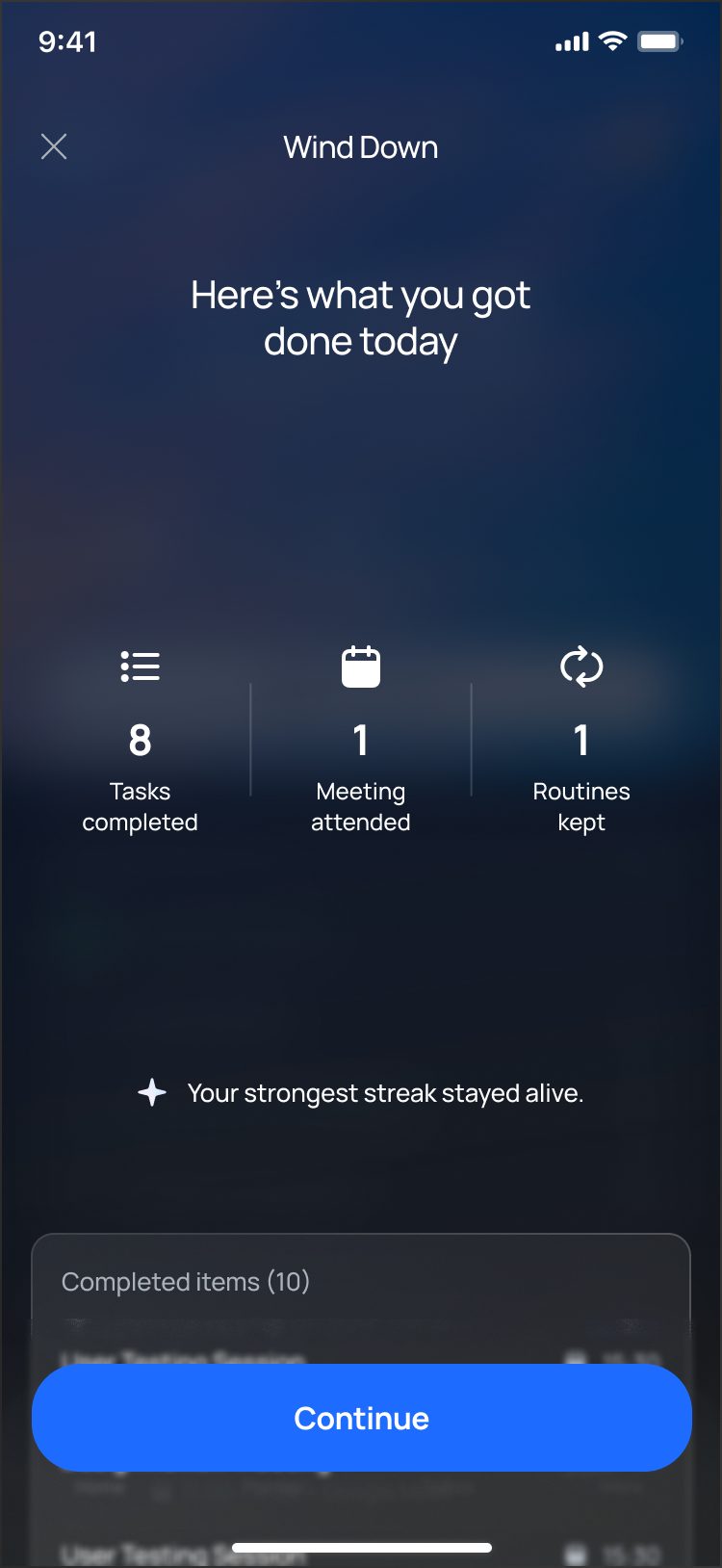
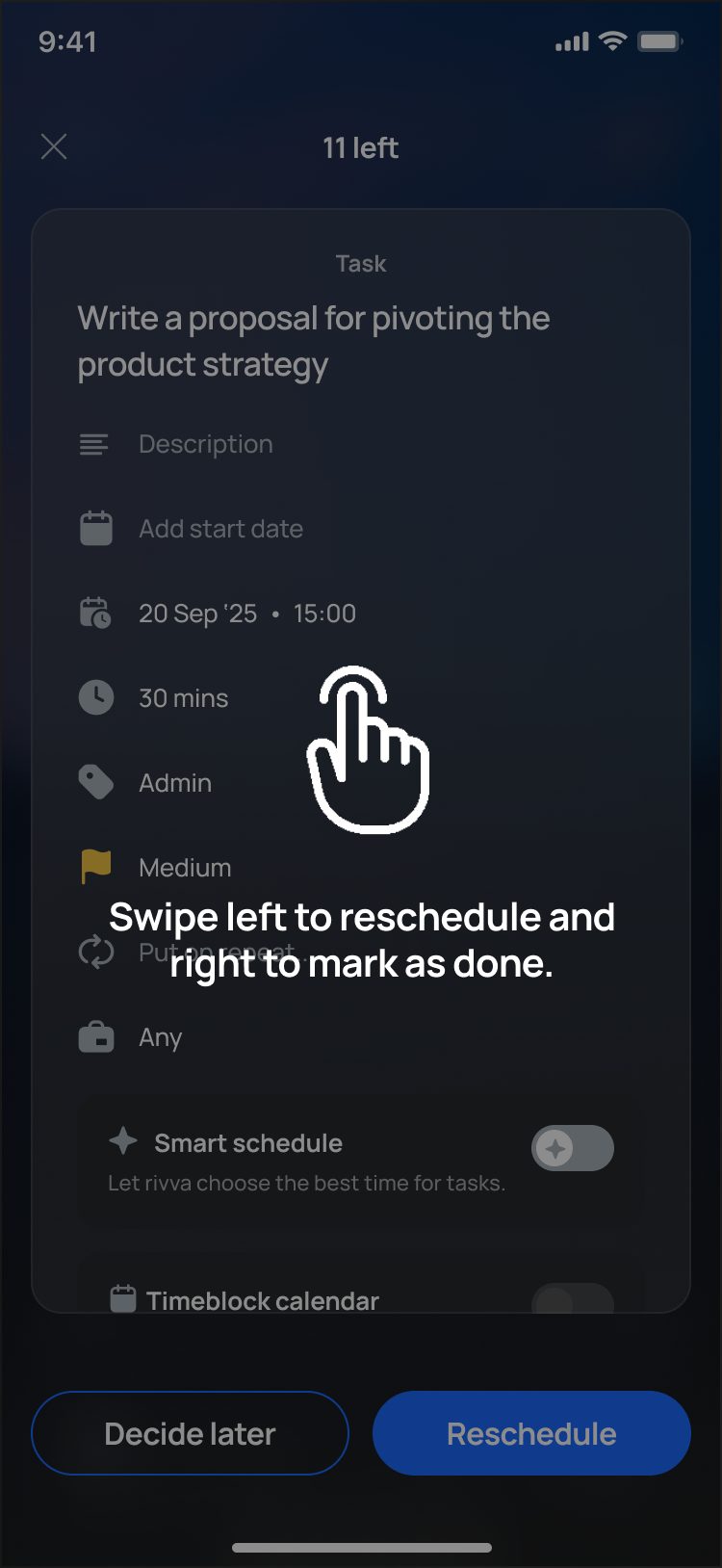
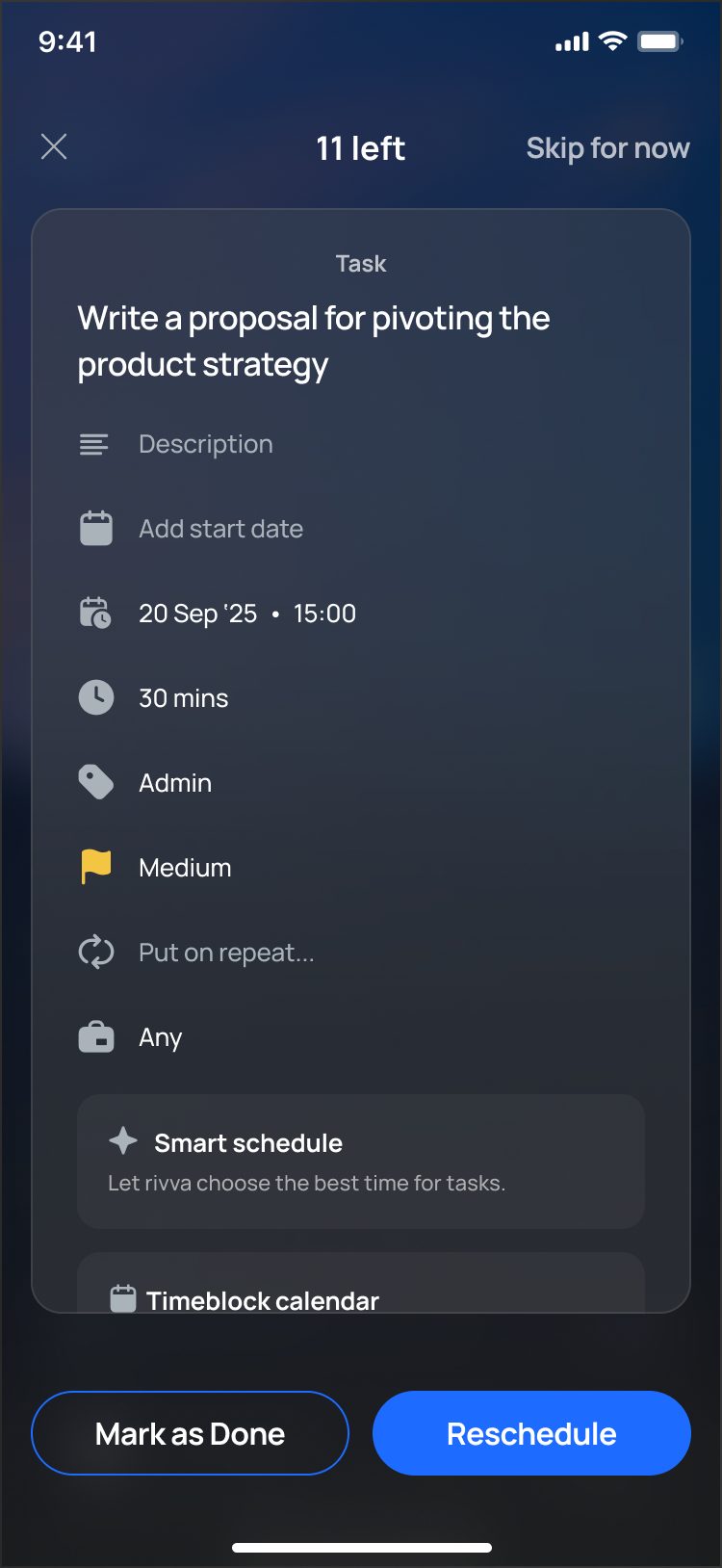
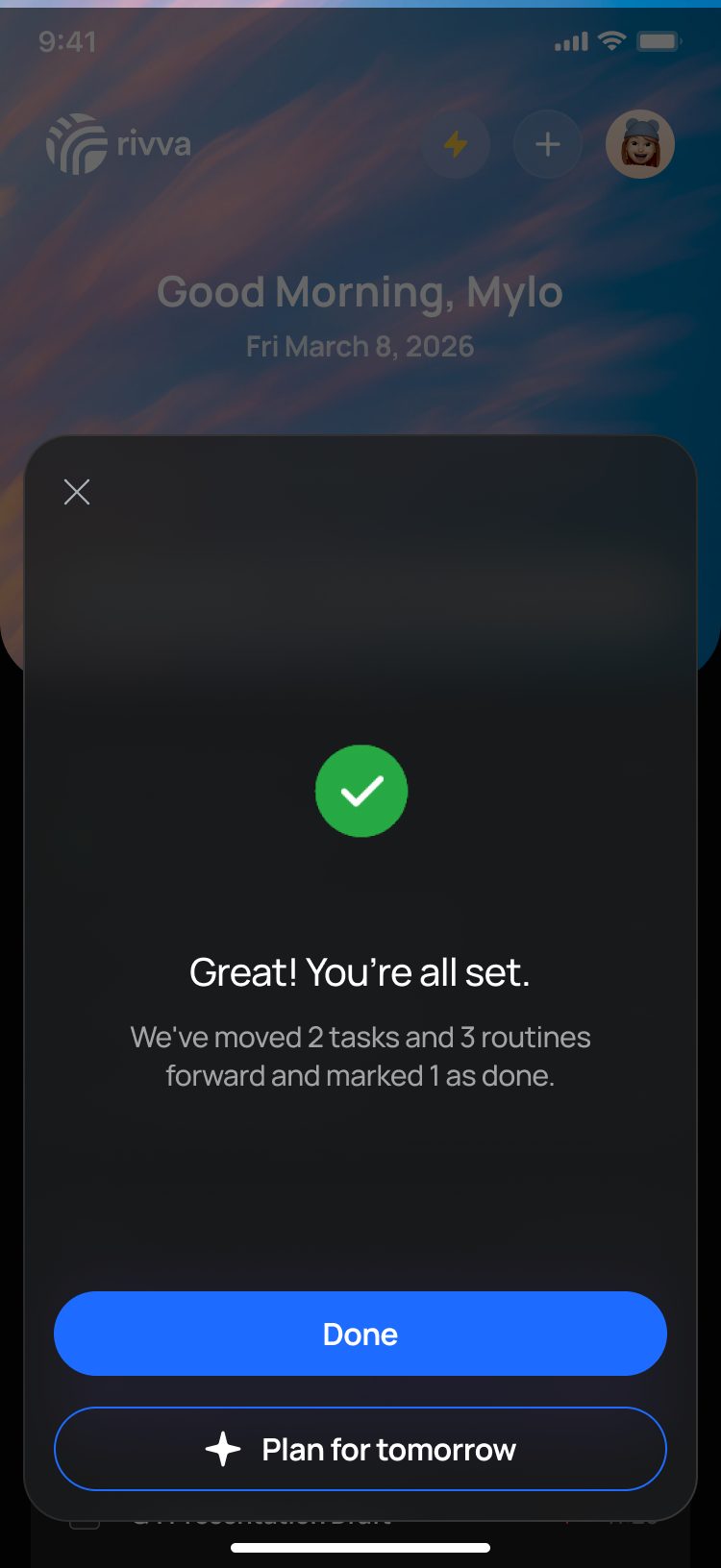
Wind Down closed the day: what you got done, then what was left. My first version went one task at a time. The shipped one is a stack of cards: swipe right for done, left to reschedule.
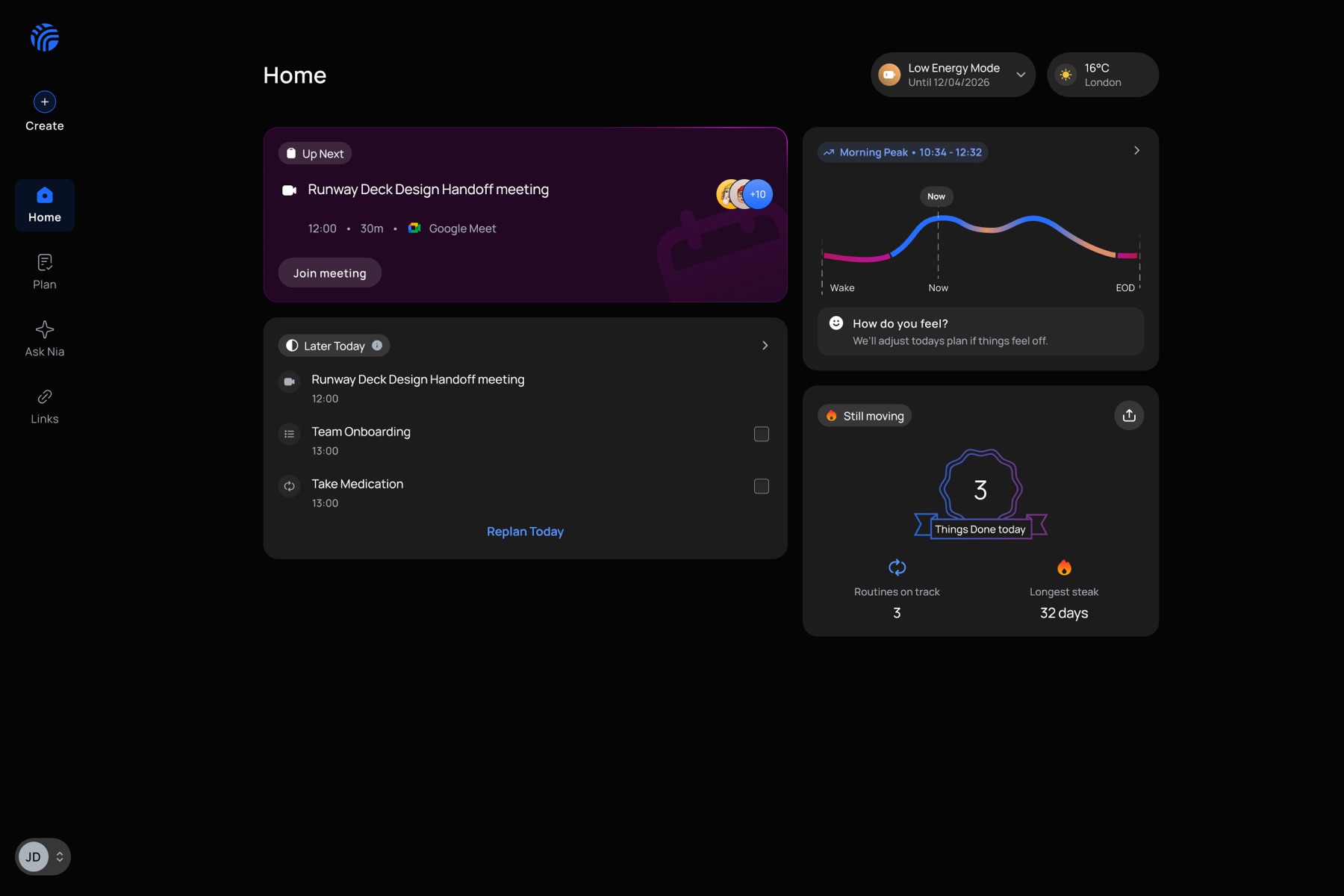
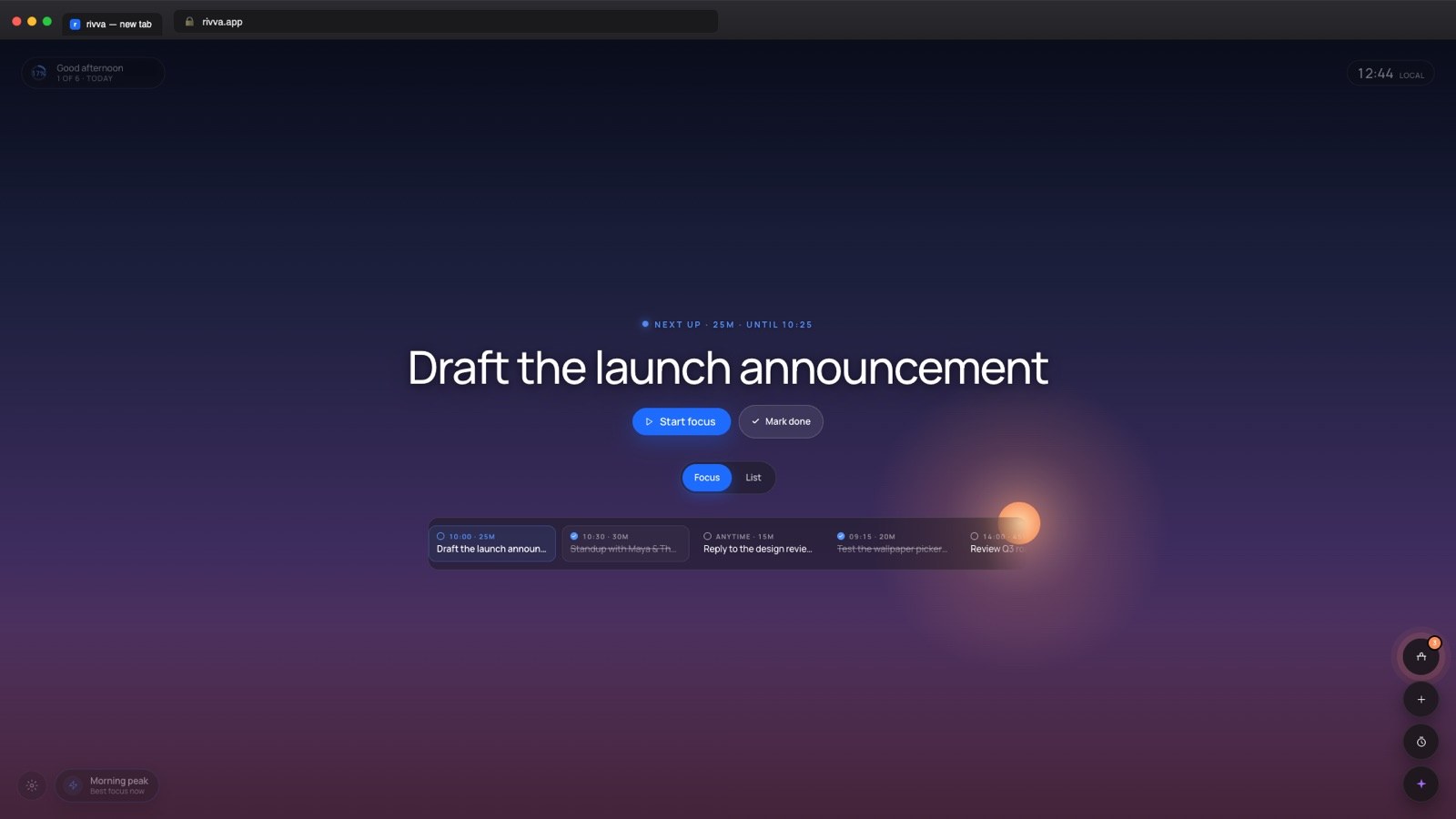
The same loop ran on the web and in a browser extension that made every new tab “next up”. I built one design system across all three from shared components and platform variants, right for a small team. At scale, I’d add semantic tokens first.
How did we do?
- Activation on the new definition went from 22% to 34%, and sign-up to trial from 51% to 60%
- The median time to a first completed task went from 21 hours to 9
- Trial to paid reached 23.5%, up from 18.5% over the period I worked on it
These were weekly cohorts of about a hundred people, not a controlled test. So I read the direction, not the size: 22% to 34% is roughly 22 people becoming 34.
Nothing is quite final
I first put the paywall before anyone had used Nia, and same-day cancellations showed why that failed. We moved it to after Nia had built someone’s first plan, and I accepted losing the people who’d have paid on the promise alone.
Moving setup into the app also meant fewer people set up energy, Rivva’s original idea. Next time I’d have Nia ask about it later.
Why it closed
People who used the core loop kept coming back. What we couldn’t find was a big enough market at the price people would pay, and general AI assistants kept pushing that price down. We closed it cleanly, with subscribers looked after.
Takeaways
- Finished setup was easy to count and barely predicted who stayed. Measure the behaviour that predicts staying, not the easiest step.
- I designed the gentle reminders for myself, and Aanu knew this audience better. Ask the specialist before you design the default.
- People kept coming back, but not enough would pay. Retention and willingness to pay are separate bets, so test both as hard.